Printable Star Chart: The Complete Guide to Custom Night Sky Prints
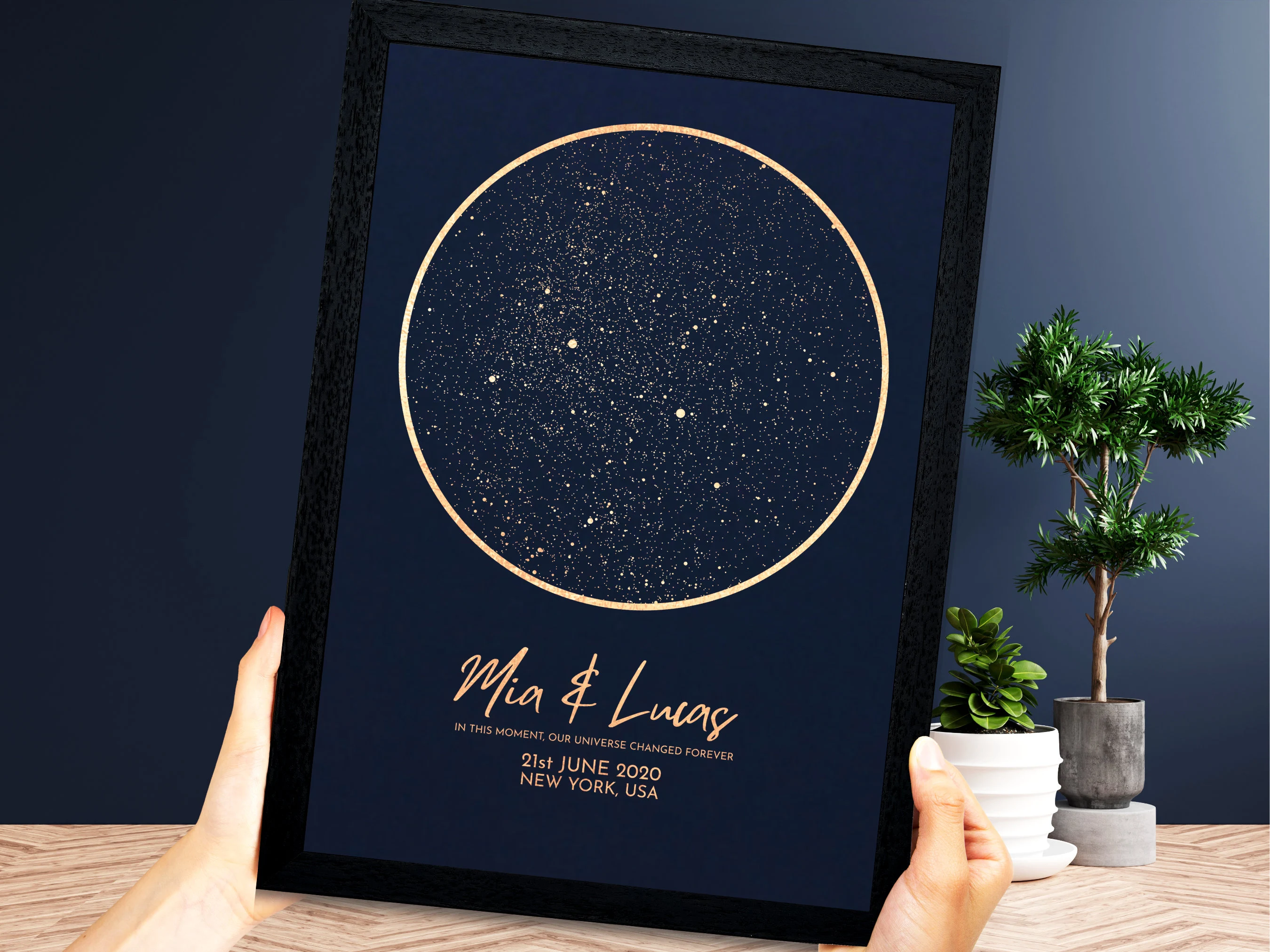
Every moment in your life happened under a unique arrangement of stars. The night you were born, your wedding evening, your child’s first breath. Each occurred beneath a sky that will never look the same again.
A printable star chart captures that arrangement. Something you can hold, frame, and keep.
What is a Printable Star Chart?
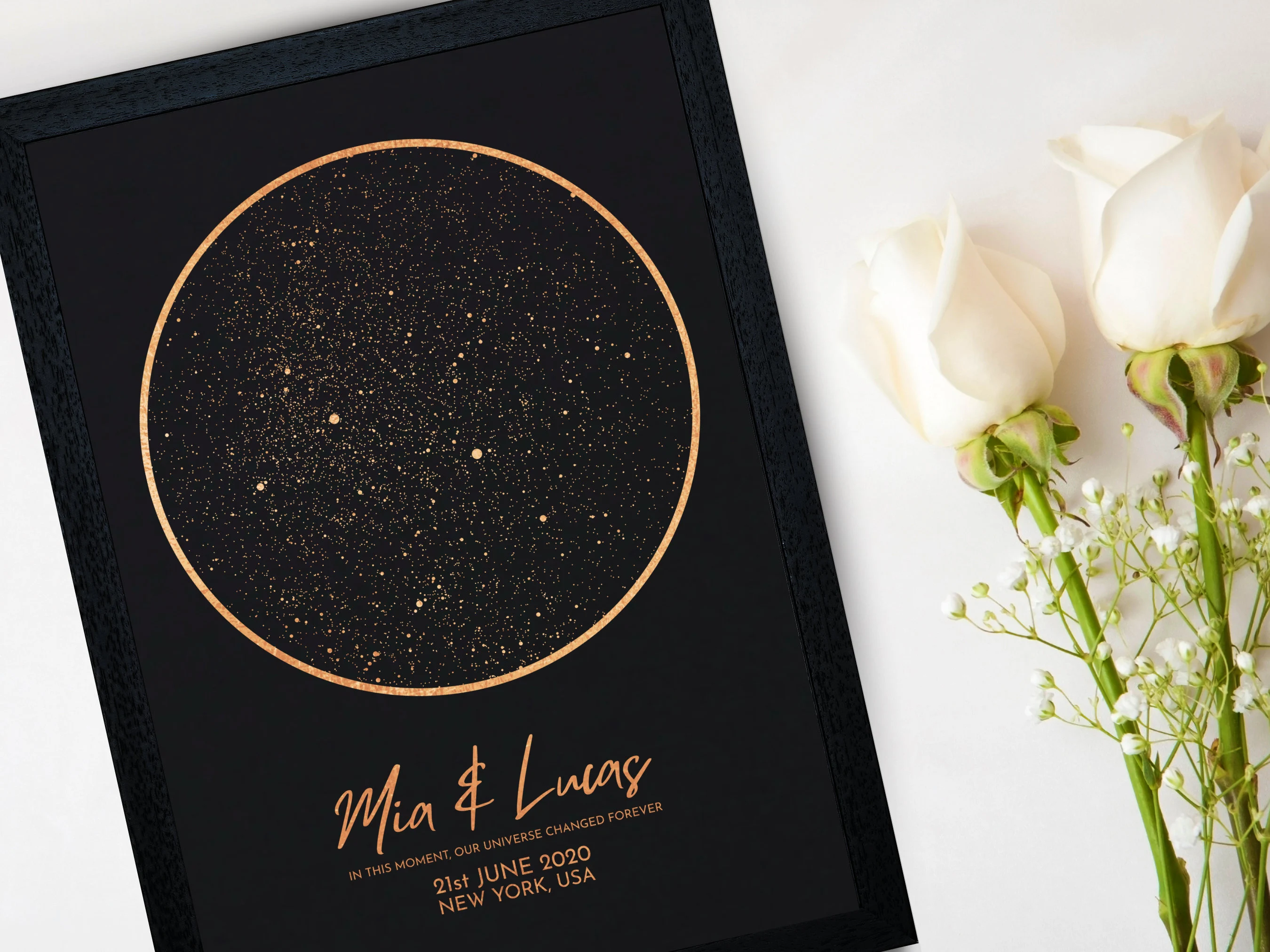
A printable star chart (also called a star map) is a high-resolution digital image showing the night sky from a specific date, time, and location. It shows where the stars, constellations, and planets appeared at any moment you choose.
Unlike generic astronomy posters, a personalised star chart is unique to your moment. The stars above London on 15th March 1985 looked different from those over Edinburgh on the same night. Different again from Sydney or New York. Your printable star chart reflects the exact sky that existed above you.
How Star Maps for Specific Dates Work
Creating star maps for specific dates requires precise astronomical calculations.
Location matters. Different parts of the sky are visible from different places. Someone in the Northern Hemisphere sees Polaris high overhead, while someone in Australia might not see it at all. Your coordinates determine which stars appear.
Time shapes the view. The Earth rotates, so the visible sky changes throughout the night. A star map from 9pm looks different from one at midnight. For births, the exact time can be captured.
Date determines the season. As Earth orbits the Sun, different constellations come into view. Summer and winter skies look dramatically different. Orion dominates winter evenings in the UK but disappears during summer.
When you enter a date, time, and location, the generator calculates the position of thousands of stars using the same astronomical principles that guided sailors for centuries.
Why Printable Star Charts Make Good Gifts
A printable star chart connects to a specific moment in someone’s life. That matters more than most gifts.
It tells a story. “This is how the sky looked the night we met” carries more weight than anything mass-produced.
It lasts. Flowers fade. Chocolates get eaten. A framed star chart stays on the wall for years.
It works for any occasion. Birthdays, weddings, anniversaries, new babies, memorials. Any date that meant something.
It’s unique. No two star charts are identical unless they share the exact same date, time, and location.
Popular Occasions for Printable Star Charts
Birthday Star Charts
“The night you were born” is the most popular use. Whether it’s an 18th, 30th, or 50th birthday, showing someone how the stars aligned when they entered the world makes it personal.
For a birthday star chart, you need:
- The birth date
- The birth time (if known, evening time works if not)
- The birthplace or hospital location
Parents create these for children. Partners for each other. Friends for milestone birthdays.
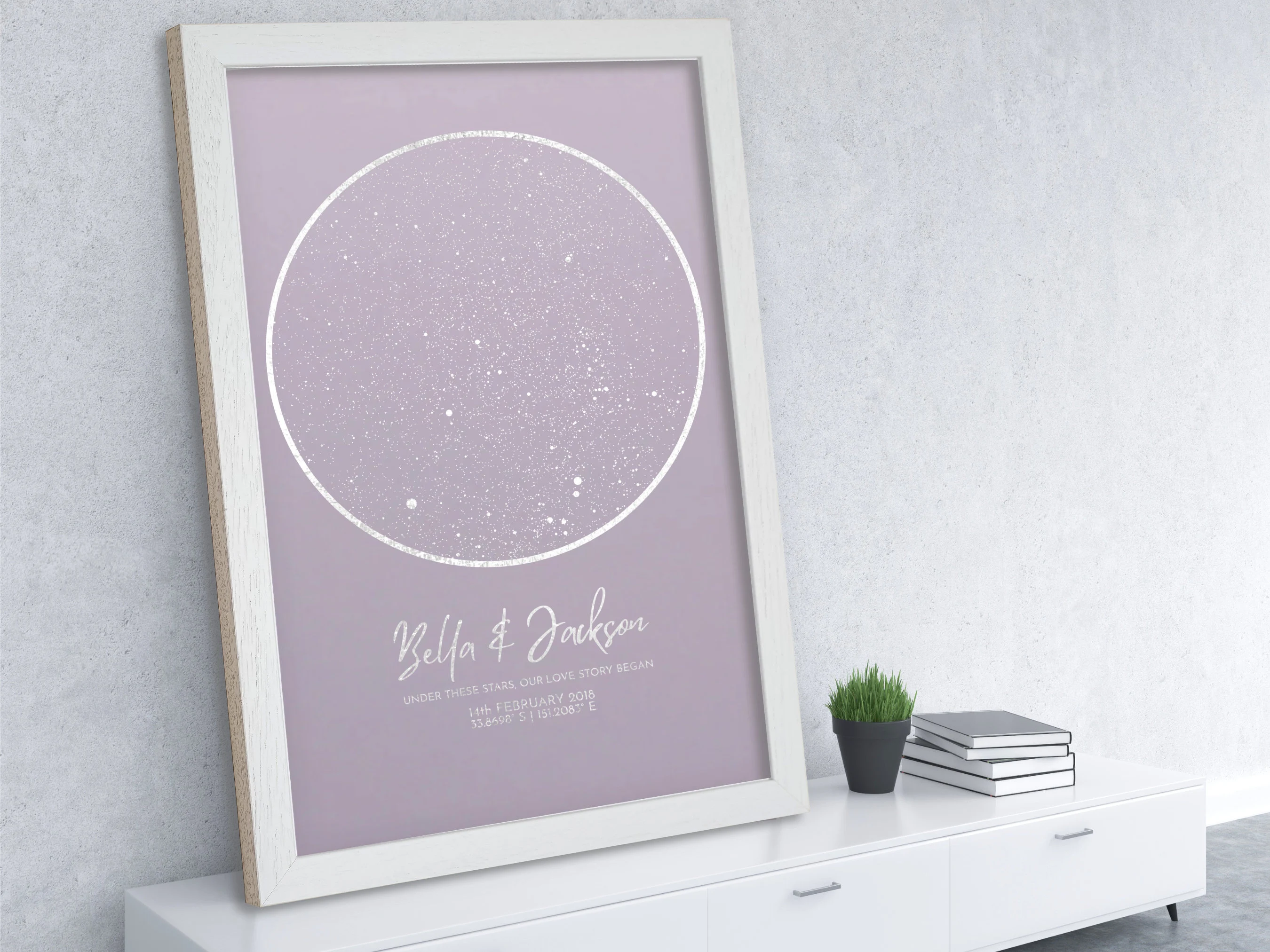
Wedding and Anniversary Star Charts
The night sky from your wedding day makes a romantic keepsake that sits well alongside photos. Many couples display their wedding star chart next to their favourite wedding photo.
Anniversary star charts work as traditions too. Some couples collect a new print each year.
Other dates worth capturing:
- The night you first met
- Your first date
- The proposal
New Baby Star Charts
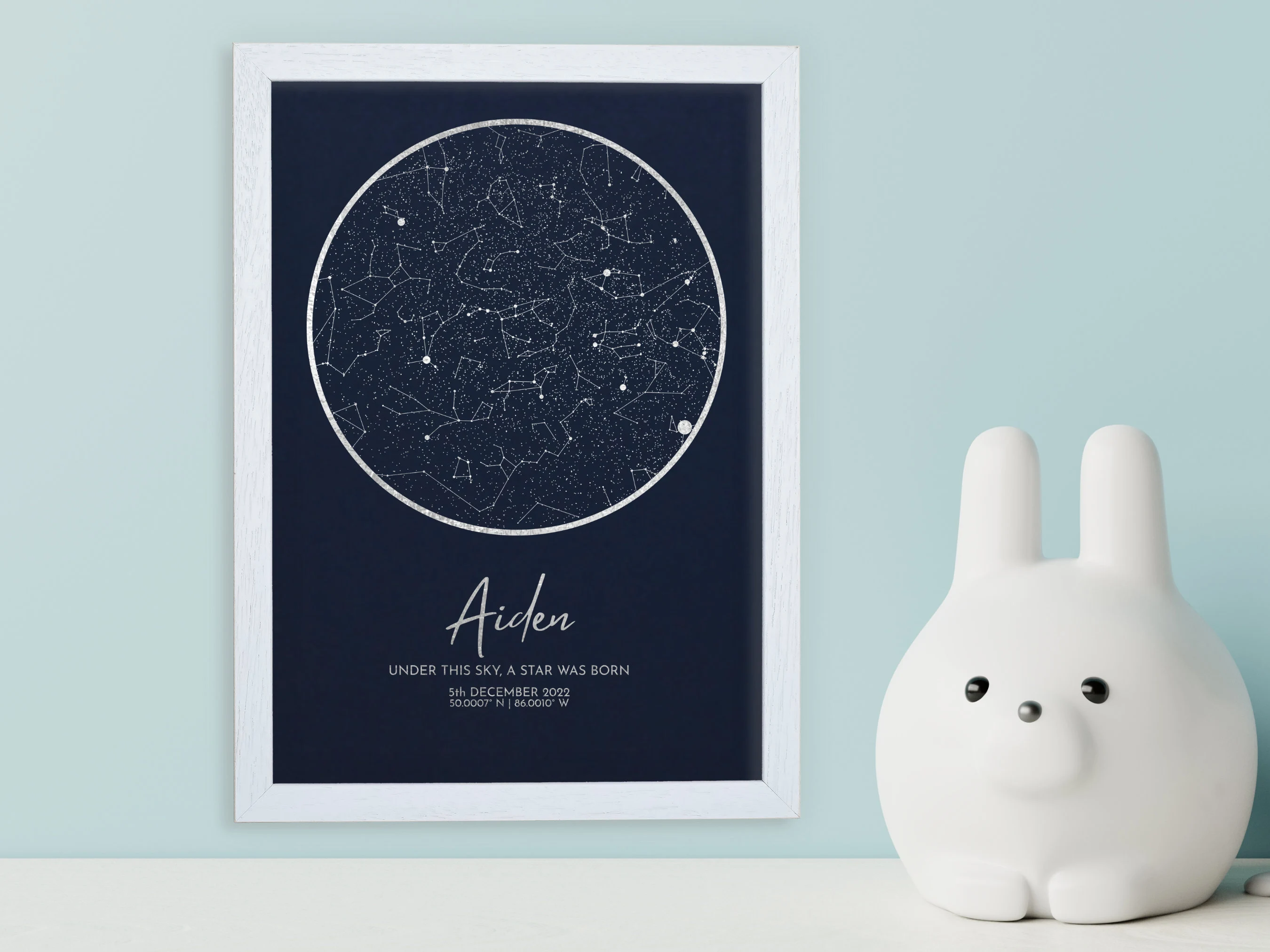
For new parents, a star chart showing “the night you arrived” works well in a nursery. Combined with the baby’s name and birth details, it becomes something children value as they grow older.
Hospital coordinates with the exact birth time give you the most accurate representation.
Memorial Star Charts
Star charts offer a gentle way to remember someone. Rather than focusing on loss, they mark a moment: a birthday, a wedding anniversary, or a day that held meaning.
The night sky continues regardless of what happens here. Some find that comforting.
How to Create a Printable Star Chart
You need three pieces of information:
- The date - Any date works, past or future
- The time - Evening (8pm-11pm) shows the most stars
- The location - City name or specific coordinates
What to Look for in Quality
Not all star charts are equal. When choosing one, consider:
Astronomical accuracy. Star positions should come from real data, not approximations. You want the actual sky, not an artist’s impression.
Print resolution. At least 300 DPI for sharp printing at larger sizes. Low-resolution files look pixelated at A3 or poster size.
File format. PNG files with transparent backgrounds let you print on white, cream, black, or coloured paper.
Customisation. Names, dates, custom messages, colour schemes. These make it personal.
Printing Options
At home: Most printers handle A4 well. Use photo paper or quality cardstock.
At a print shop: For A3 or poster sizes, Snappy Snaps, Boots Photo, or Staples offer professional printing. Upload your file and select your size.
Online services: Vistaprint or Photobox can print and deliver framed versions directly.
Matte or lustre photo paper gives a clean finish without reflections.
Display Ideas
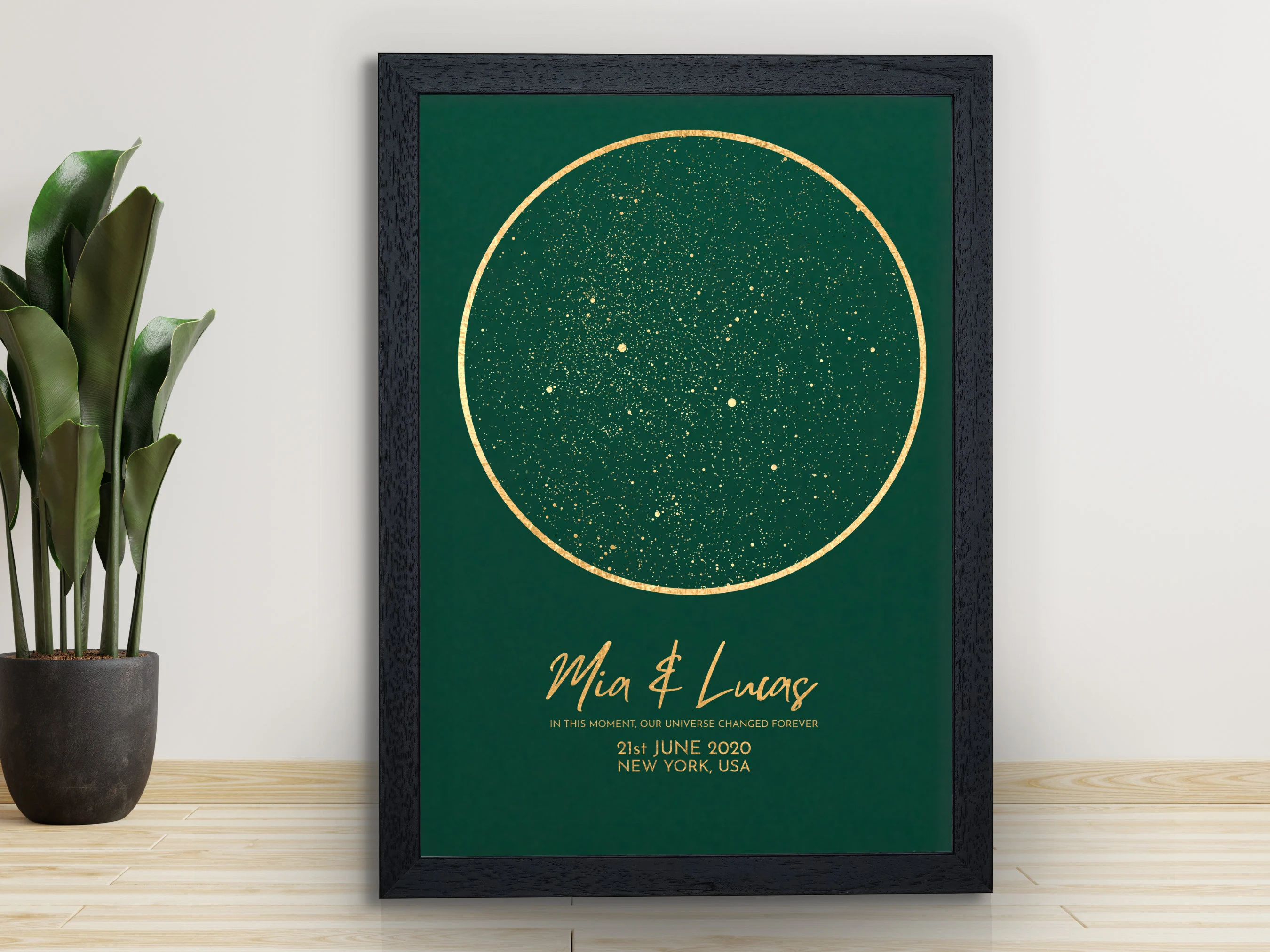
Classic framing. A black or white frame suits most star maps. Floating frames work well for a premium look.
Gallery wall. Combine with related photos. A wedding star map alongside wedding photos creates a cohesive display.
Nursery feature. Match the frame to the nursery colour scheme. Above the cot works as a focal point.
Minimalist. White frame, light wall. Let the stars do the work.
Frequently Asked Questions
Are printable star charts astronomically accurate?
Quality ones use real astronomical data. Star positions, constellation lines, and visible planets reflect what appeared in the sky at your chosen moment. Cheap versions sometimes use generic patterns. Check that the service calculates positions for your specific date and location.
Can I create a star chart for any date in the past?
Yes. Astronomical calculations work backwards. You can create a star chart for a grandparent’s birth in 1940 as accurately as for last week. Star positions change very slowly over human timescales.
What’s the best time of day to show?
Evening, between 9pm and 11pm. The sky is dark enough to see stars clearly. For births or time-specific moments, use the actual time.
What’s the difference between a star map and a star chart?
Nothing. Different names for the same thing. “Star map” tends to appear more in gift contexts, “star chart” in astronomical ones. Both describe a visual representation of the night sky.
How big should I print it?
A4 works for desks or smaller walls. A3 creates more impact. Make sure your file resolution supports your chosen size. 300 DPI files print well up to A3.
Capture Any Moment in the Stars
Create a personalised star chart from any date and location. The perfect meaningful gift.